

Long-running Coding Agents Change Nothing if You Don’t Hold the Architectural Compass of the Product You Want to Build with AI
Why having a shared picture of your build with the LLMs powering your CodeGen platform or AI-assisted coding tool is the only way to stay in control before initiating coding agents

Reading the recent paper (it might not look like an in-depth piece, but I prefer to refer to it as a paper despite its brevity) by Anthropic on the way forward for coding agents that effectively manage long-horizon tasks “working across many context windows,” I began to reflect on what I have been emphasizing all along for those venturing into the realm of building with AI (Vibe Coding in particular).

Yes, I felt somewhat vindicated. Not that I didn’t believe in what I have been saying.
Here is the point.
Having a shared understanding of the build (at least at a high level, beyond just what is visible from the UI point of view) with the LLMs powering the coding agents, you are delegating your build workflow to, is the most valuable thing to start working towards before you say “build me this or that”.


Only then can you control the output that makes up your build-to-be as a swarm of agents handles different parts of the development task and returns to hand off the parts that need your approval.
If you speak Dev and, most importantly, develop a mental model of how the underlying modern software wiring functions, you stay in a position to guide the models across development cycles spread over different context windows among agents.
This begins by providing the “Initializer Agent” with the overall picture and then extends to the other agents, who are iteratively responsible for wiring various tech stacks that comprise modern software by generating code.
This is not exclusive to a single coding agent in one AI-assisted coding platform or tool.
This is true when you are dealing with all CodeGen platforms and AI-assisted coding tools that have underlying coding agents powered by the frontier models.
They are all riding the same wave.
The conceptual understanding of how modern software gets wired matters most.
Having a shared picture of the build with the LLMs is what gives you complete control over what gets built.
That is why I keep reiterating the need to be fluent in speaking Dev and having the architectural awareness of how modern software gets wired.
With that clarity, you are unstoppable in the realm of AI-driven software development, even as a non-techie with no background in what the underlying abstractions represent.
Plus, the responsible path is already set by yours truly in case you are interested.
To start Vibe Coding responsibly, the only two resources you need are the Vibe Coding Starter Kit and the Vibe Coding Prompt Kit.
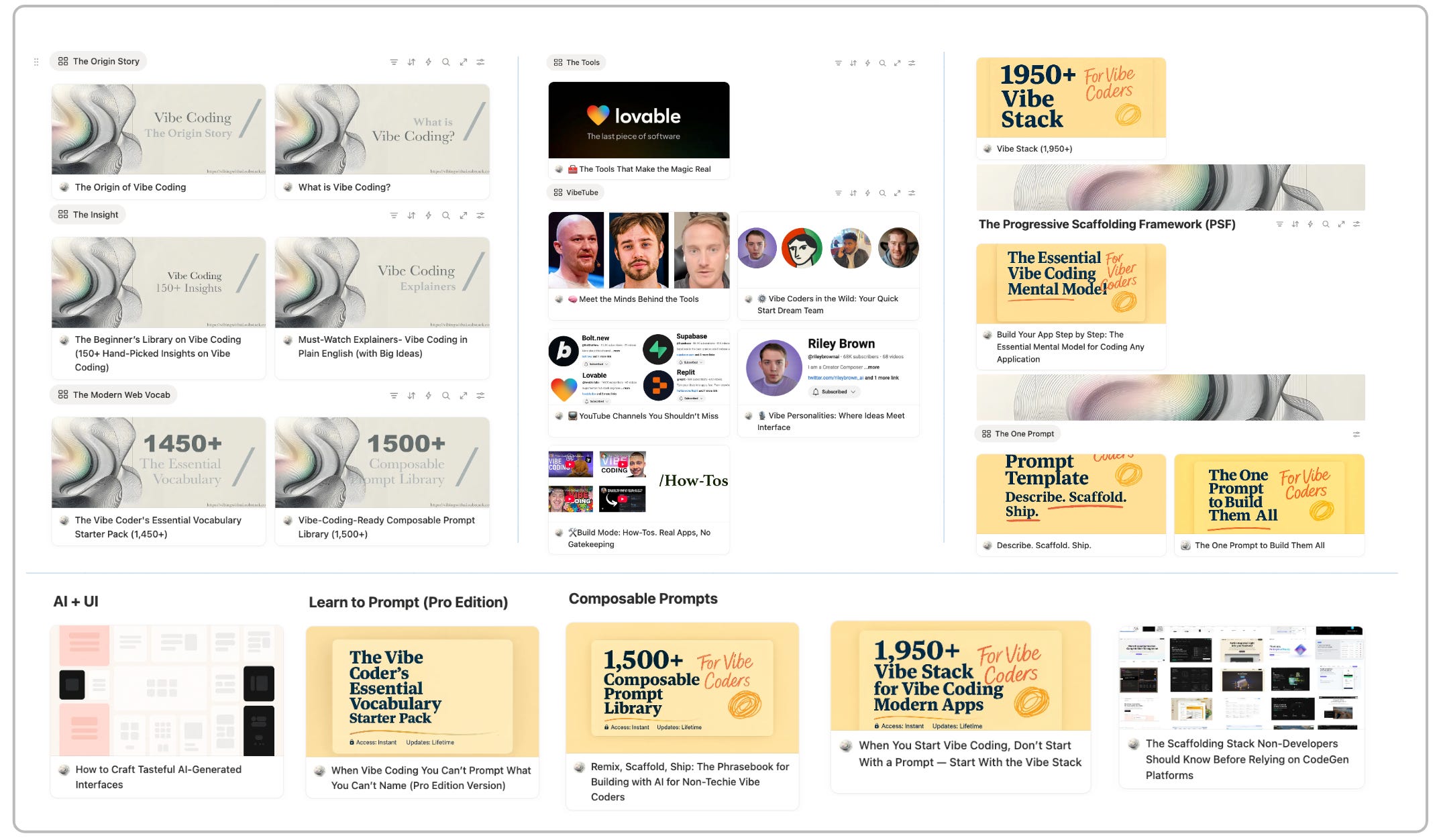
These two Kits come loaded with everything you need to speak like a traditional developer and develop the mental model you need to have a shared picture of your build-to-be with the LLM powering your Vibe Coding platform or tool of choice.
Once you master the two essential literacies, speaking Dev and thinking like a software developer, in scaffolds, you can easily develop the mental model that provides the clarity to have architectural awareness of how modern software products are wired.
With that knowledge in your arsenal, you can spawn a swarm of coding agents to oversee the different aspects of your project in real-time while you remain in control.
Because you have figured out what your product-to-be should look like, how it should function, which scaffolding stack needs to be used to make it fully operational, and on top of that, you speak Dev.
That is what the Vibe Coding Starter Kit and the Vibe Coding Prompt Kit provide you.

