

The Simple Scaffolding Framework for Non-techies Builders
The framework that helps you develop a shared picture of your build-to-be with the LLMs powering coding agents inside CodeGen platforms and AI-assisted coding tools, when Vibe Coding.

I can’t believe it’s been over a month now.
Back in November, I wrote a curated guide titled “The Scaffolding Stack Non-Developers Should Know Before Relying on CodeGen Platforms.” The title is telling, isn’t it?
The Scaffolding Stack Non-Developers Should Know Before Relying on CodeGen Platforms

Everyone is a builder now that AI has democratized software creation.
In that, more like a guide than an article, my objective was to introduce non-developers venturing into the world of building with AI to the tech stack that modern software is built on, the invisible layers that make it all work.
A curation functioning as a guide or map.
In the closing section of that guide, I promised that in the weeks ahead, I’ll move from theory to practice, embedding each component into real projects, one step at a time.
“Each abstraction deserves its own moment of focus,” I said.
Guess what? I, yours truly, broke my promise.
In part because I was too lazy and in part because my credit depletion rate was so high, despite earning $28 shy of $1000 from my Vibe Coding Kit sales over the last three months, my token credit consumption rate was out of control.
But primarily, I would say it’s because I haven’t been the type of person to pursue new platforms and tools out of FOMO.
I know, I know. I keep saying it.
If you have been following me, you will know I have always rejected chasing trendy tools. If you are new here, welcome, and now you know.
This isn’t merely a whim; I have scars to prove my commitment.
I wasted so much of my valuable time (it wasn’t so clear to me back then) playing with tech stacks left, right and centre, only to drop them without a practical use case that added value for me in the early days of my software development career.
In my 17 years of software development experience, I have seen it all. I have seen the hype, the bust, and the deprecations of the products I have relied on heavily.
If you ask any veteran developer, they will tell you the same story. I think that is why the older guard of software engineering is skeptical about embracing AI as their daily-driver pair programmer.
This is all to say that even this article won’t deliver on the promise I made.
There will be no “Vibe Coding Practical Series”.
Forgive me.
No, it doesn’t mean that they will never come.
They are cooking.
I am not betting you.
I opened the sentence “I am not betting you” just above with “Trust me” and then removed it. That is how desperate I am to have you believe me.
Now that I have covered some of the recent changes in the LLMs that have the potential to impact how this new craft of building with AI - Vibe Coding - is evolving, I feel ready to dive deep into the labyrinth of the CodeGen platforms and AI-assisted coding tools that are ruling the Vibe Coding space.
What Do the Latest Model Improvements Mean for Non-Techies Venturing into Vibe Coding?

Yes, the models continue to improve within what now appears to be a very short cycle.
Yet again, there is some other matter that needs clarification.
No, I am not getting cold feet. I almost said “trust me” again. I am definitely getting the heat from the fast-depleting token credits, if anything.
What are these clarification tasks? You might ask.
I am much obliged to explain.
I am all over the place, right?
I have a hard time keeping my writing flow without jumping here and there
ChatGPT is the only editorial guideline that I have.
But sometimes it even encourages me to go down my usual path.
My Consistent Mantra
The constant mantra I have been repeating since I started this Substack is this.
Speak Dev and think like one, in the Scaffolds.
True, “fully giving in to the vibes” feels freeing when building with AI at first.
It takes the load of anxiety off and the responsibility for the generated output. The team at Cognition, the company behind Devin and recently Windsurf, had to say the following to describe that.
We feel that the popular usage of “vibe coding” has strayed far from the original intent, into a blanket endorsement of plowing through any and all AI generated code slop.
If you lack clarity about how your product is scaffolded, the tech stack involved, and the purpose of each component, you are no longer making deliberate design or architectural choices.
You are delegating decision-making to coding agents powered by LLMs, which are inherently non-deterministic by design (we always get caught up in the AI-induced hype cycle and forget that fact, right?).
That is where the illusion of “vibes” comes back to bite you, with technical shortcomings you cannot even comprehend.
That is one of the convincing reasons that leads traditional developers to dismiss Vibe Coding from the outset without giving it any thought.
Who Gets to Build? The Cultural and Technical Tensions Behind the Vibe Coding Backlash

If you’ve spent any time on Reddit, you already know how fast a simple post can turn into a battlefield.
Given my over two decades of experience in software development and the digital media space, I have always been an avid proponent of the idea that coding is never the bottleneck when building with AI.
There are plenty of “code monkeys” already in the market for that.
In the words of Amjad Masad ,CEO of Replit:
“....is [AI] going to replace me well if I am like a code monkey it’s going to replace me but if I see my place in the world as as someone who can generate ideas and create products and services because I understand what people want and how how the economy works and all of that, I think that’s still irreplaceable.”
Amjad uses “code monkey” to distinguish between developers who merely execute repetitive coding tasks and those who act as problem solvers with a builder’s mentality, using AI as a powerful tool to bring their original ideas to life.
Understanding the specifications of the build-to-be, what tech stack to consider, trade-off decisions, decisions regarding deployment with considerations that target smooth scaling, technical debts that are acceptable for the time being, technical debts that must be avoided by any means before they harden, dealing with project cost hikes, changing horses in the middle of the project development cycle, oh, the list goes on.
The good thing is that now that AI has democratized software creation, everyone is a builder, and English has been the hottest programming language for the past 3 years in a row.
A new creative medium is suddenly available to everyone.
But taming this new medium requires clarity and understanding within the very domain you are collaborating with AI.
In the software creation domain in particular, having architectural clarity about how modern software products are wired and some understanding of the contemporary lingo of software development, not coding (I am, however, a proponent of learning to code for those entering the world of building with AI, at least eventually), goes a long way.
As an entrant to this new world of building with AI, however, these two can take you a long way.
Speak Dev.
Learn to Speak Dev Before Reaching for Vibe Coding Tools

Getting Started with Vibe Coding: A 4-Part Series (Non-Techies Edition)
Think like one, in scaffolds.
Think Like a Dev, Think in Scaffolds

Getting Started with Vibe Coding: A 4-Part Series (Non-Techies Edition)
To help anyone entering the world of building with AI without a technical background, I curated over 1,450 modern software development vocabulary terms.

I also developed a framework I call the Progressive Scaffolding Framework (PSF) to help non-techies define the basic layout of their builds, using the PSF’s five layers to scaffold their product.

I have also developed a nine-field prompt template that makes it seamless to scaffold a prompt for building any web app using any of the CodeGen platforms and AI-assisted coding tools, without the overwhelm of PRD and spec-driven development.

The One Prompt template is too flexible; you can translate only the parts that make sense for the platform or tool you are using to build your product.
Especially given that the CodeGen platforms are much more rigid about adopting tech stacks other than those they provide through vertical integration, the modular nature of the Prompt template can be convenient.
I have discussed these two extensively, the PSF and the One Prompt template, along with over 3000 composable prompts, which make it easier for anyone entering the world of software creation, without any idea of what is what, to build with AI incrementally. So, I will not be covering them here.

With another promise to keep the promise I already made, earlier in this article, I will introduce another subtle framework I call the Simple Scaffolding Framework for non-techies venturing into the world of building with AI for the first time.
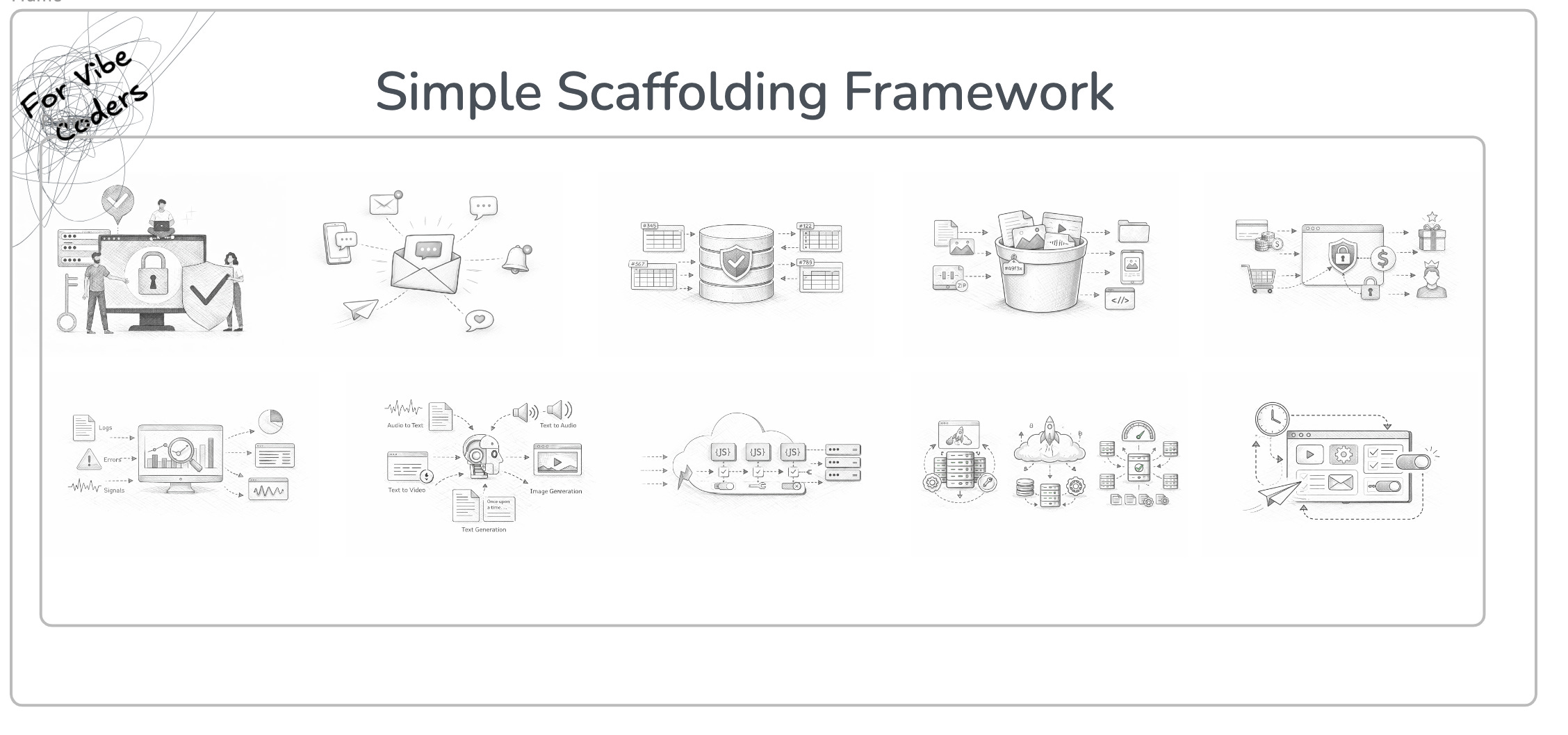
If you are a practitioner or someone who can handle their own, then you do not need this framework.
You might be good to go by simply skimming through the “The Scaffolding Stack Non-Developers Should Know Before Relying on CodeGen Platforms” article.
This Framework, the Simple Scaffolding Framework, is exclusively for non-techies with no technical background whatsoever.
Non-techies Builders.
Before explaining what this framework entails, we first need to understand why another framework is necessary.
Another one.
I’ll attend to it briefly.
The PSF was the one mental model I have always said anyone entering the world of building with AI needs.
The Mental Model You Need to Start Building Using AI

Everyone’s talking about building apps with AI.
It is a five-layer mental model that captures the user-facing aspect of any software product.
Simpler. Easier to bring non-techies into the idea of scaffolding a modern web-based app, focusing on the end-user onboarding aspect of building with AI.
That was about it. Everything else was implicitly delegated to the LLMs powering the CodeGen platforms and AI-assisted coding tools.
It has been over six months since I released the PSF as part of the Prompt Kit.
Yet until recently, I have felt like something was missing. It’s been bothering me for months.
I have always felt there is a missing link in the transition from the PSF to the One Prompt template, when viewed from a non-technical person’s perspective.
Some of the nine fields that make up the One Prompt template are perfect to fill the gaps, I tried to convince myself.
Because the One Prompt template covers more than just the user-facing aspects of the build, it also includes backend details such as database, data storage, AI inference, payment, and authentication integrations.
Forget the Hype. Here’s the Real Way to Build Software with AI—Without Coding

The Vibe Coding Hype Machine
But I could not find something to fill that void in between, especially for non-techies.
The adventurous non-techies, like Riley Brown, can hold their own, if not be on par with the practitioners, but for a complete non-techie coming in, something feels off. That is the one suggestion I have received from those who bought the Vibe Coding Prompt Kit from Whop GumRoad.
In hopes of mitigating the shortcomings of the PSF-One Prompt Template transition, I worked on the guide I mentioned earlier. The one that curates all modern tech stacks that are underpinning how modern software products get wired.
However, the disconnect was still there.
I wasn’t delivering meaningful value to my subscribers or to customers who had purchased the Vibe Coding Kits.
Then I was sold on the idea that the void a non-techie could face when transitioning from the PSF to the One Prompt template needed to be filled, so they do not get overwhelmed trying to connect the dots.
So I decided to create this framework - The Simple Scaffolding Framework (SSF) - to bridge the gap between the two - the PSF and the One Prompt template.
More likely to complement the PSF, so a non-techie can only jump onto the One Prompt template with everything figured out, rather than having to deal with unfamiliar components.
Yes, in the Vibe Coding Starter Kit, which includes 1,450 curated modern web vocabulary terms divided into 13 categories that align with the underlying components of modern software products, all terms are defined, but connecting the dots might be a stretch for non-techies.
After all, I am presuming I am here for the non-techie.
It may be the over-thinker in me.
When you dive into the SSF, it might feel as though I have already covered the tech stacks in “The Scaffolding Stack Non-Developers Should Know Before Relying on CodeGen Platforms”.
That indicates you are a practitioner—someone who can navigate this new space of AI-assisted development more easily.
Kudos to you. I would love to hear your thoughts on these ideas I have been dumping on non-techies.
Drop your two cents any time.
But for a non-techie, despite being verbose (a quality I happen to have, and not sure whether it’s good or bad) in that article, I fear I am not doing them a service by overwhelming them with all those details under each tech stack category.
By now, I am confident you can see why I chose to fill the gap with yet another framework.
At no additional cost, you can access the Simple Scaffolding Framework in the Vibe Coding Prompt Kit, alongside the PSF and the One Prompt template, if you already bought the Prompt Kit. If you are a paid subscriber to this Substack, it is automatically included at no extra cost as part of the onboarding resources you already have or will have, depending on when you upgraded to the paid tier.
To give you a quick rundown of the SSF:
Simple Scaffolding Framework (SSF)- The Vibe Coding Builder Framework for Non-techies.
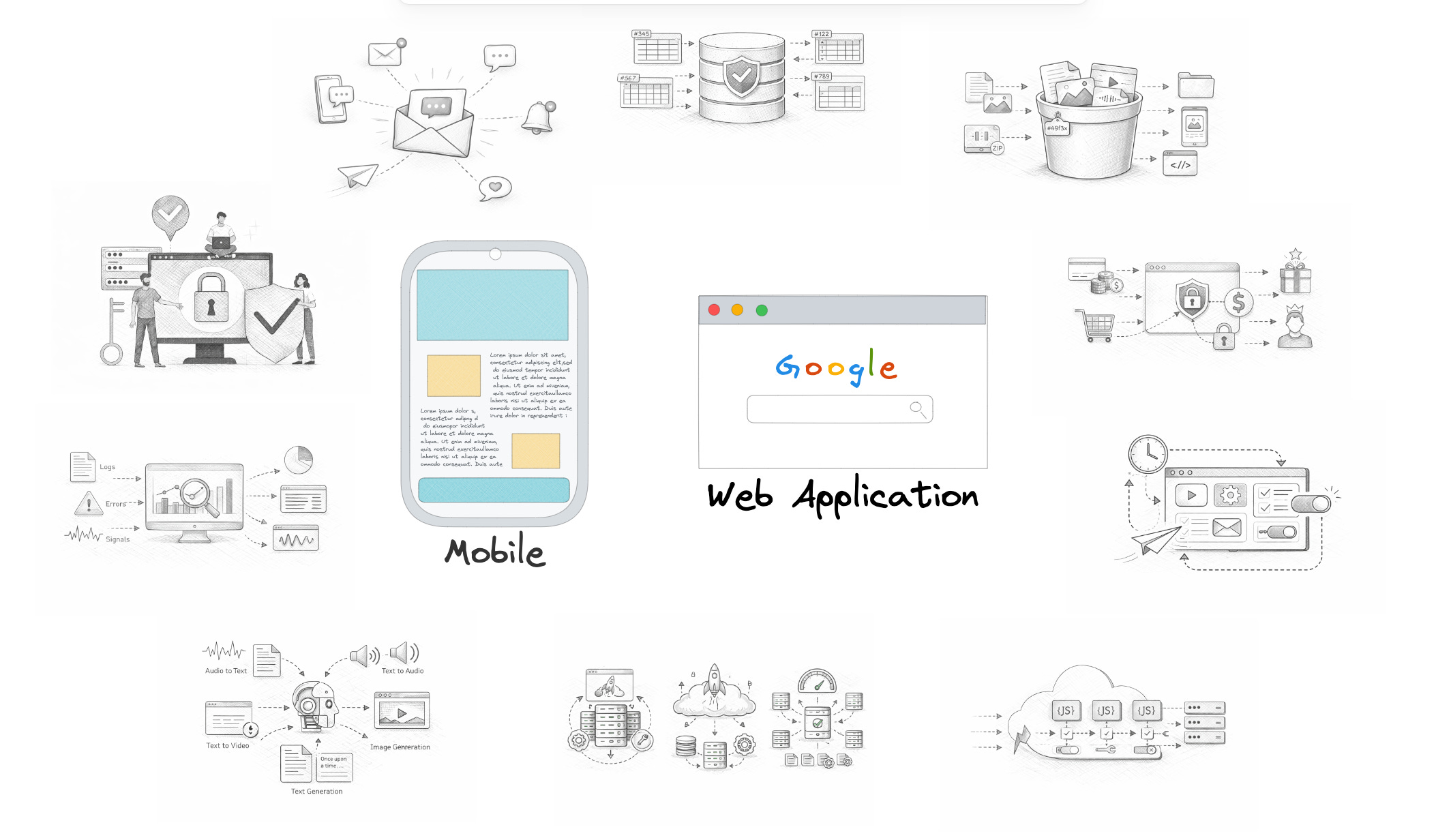
Each section answers one non-delegable question you must resolve before you start to craft your prompt using the One Prompt Template (You know, the one prompt to rule them all, okay to build them all).
When you strip any product down to its scaffolding, the same parts keep showing up.
And if you pay attention and make an effort to understand these parts beyond them being just another component to wire or an integration point.
The decision required for implementation crystallizes.
A mix of underlying layers, like services and infrastructure, usually handles these responsibilities.
Whether they are wired together manually, managed by a team, or abstracted by CodeGen platforms, the underlying technology remains the same.
They are the building blocks of the modern software as we know it.
Software has been eating the world since the 2010s, and these are the components behind it.
Understanding what these components are, how they are connected, and their role in the plumbing process becomes useful once you’re familiar with modern Dev terminology.
Where each of them falls in the entire software development process is a must-know.
Knowing when you are ready to rely on them is what the Simple Scaffolding Framework is for.
Below is a list of the core layers that make up modern software products, a map of what must be integrated (or not) to convert your idea into a practical product without handing over decisions about which building block to use for what purpose to the LLM-powered coding agents embedded in CodeGen platforms and AI-assisted coding tools.
Of course, these might sound overreaching now that most CodeGen platforms are vertically integrating most parts, but hey, if you have clarity, that means you are building with your agency intact.
And that is a good thing these days, as more and more of the software creation process is abstracted.
P.S.: I skipped the UI aspect because both the Starter Kit and the Prompt Kit are packed with plenty of UI components (over 3,000, to be exact), so you can name what is what when you build the interfaces for your products. After all, that is the speaking Dev aspect of the foundational literacies that I, yours truly, have been hammering all along.
1. Authentication & Accounts
SSF Primitive: Identity changes what is possible

This layer exists to distinguish users from one another.
The primitive forces the decision of whether identity actually changes access, features, or behavior.
If nothing meaningful changes once a user is known, this layer is unnecessary.
Instead, your approach should move to the next layer, email.
2. Contact & Messaging
SSF Primitive: Contact creates a relationship

This layer is designed to ensure continuity. It can also help maintain contact without requiring a full identity feature by integrating an authentication component.
The primitive clarifies when email or messaging is sufficient, and when accounts are unnecessary overhead.
It explains why many products start here before authentication ever matters.
3. Implementing Logic on the Edge
SSF Primitive: You can run implementations without heavy logistical overhead
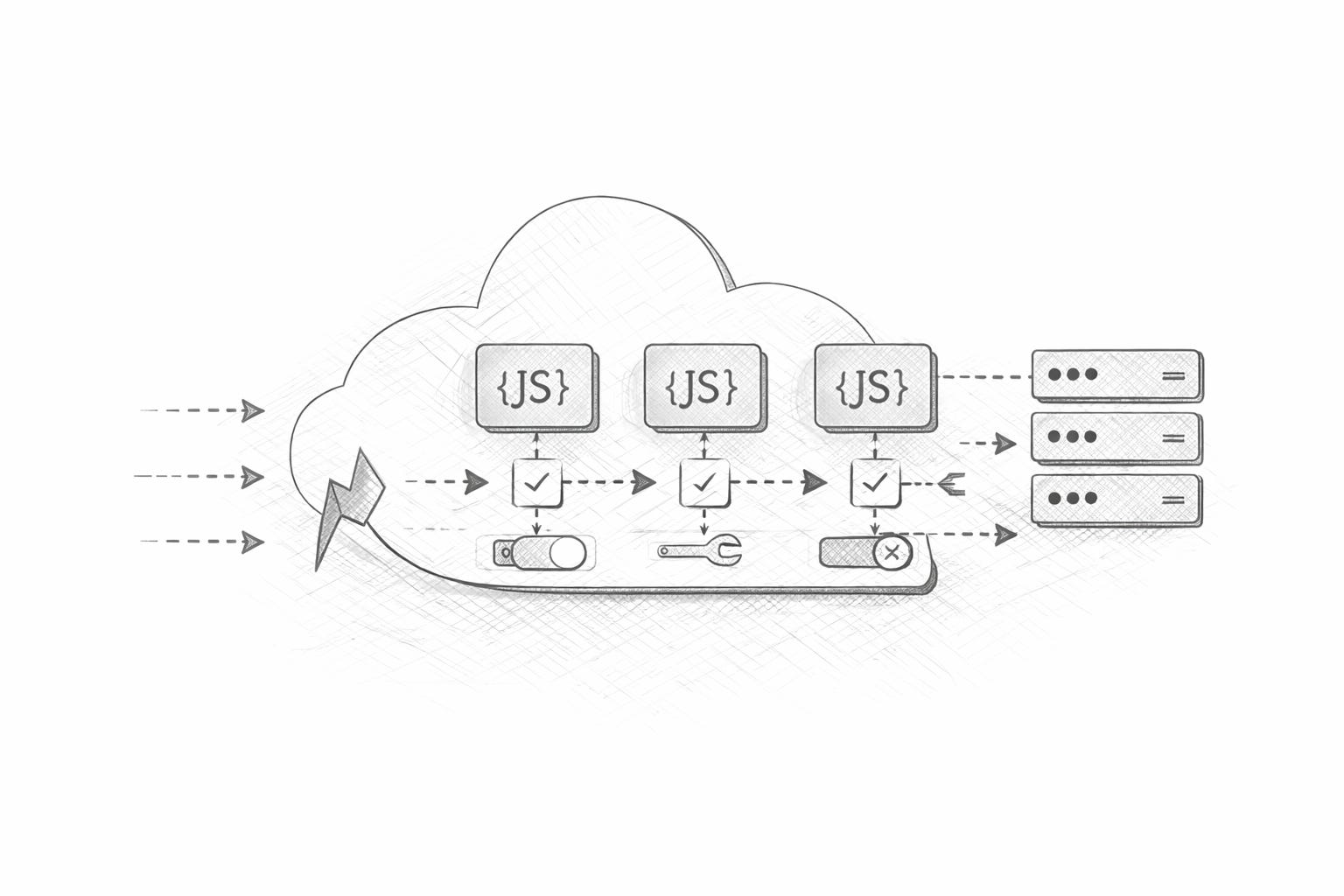
You can run logic (implementations that make your builds dynamic) without having to set up a server.
This layer handles custom logic triggered based on the user’s actions.
This primitive emphasizes that not all implementations are worth including in your build; you can keep them on the edge without the burden of integrating them.
Plus, there will be no need to have a dedicated cloud storage or server you have to deal with.
That means there will be no need for complex configurations to house the logic that makes your builds dynamic.
Significant cost savings are another important benefit of adopting this approach compared with the alternatives.
4. Structured Data Storage
SSF Primitive: Some things must be remembered as truth
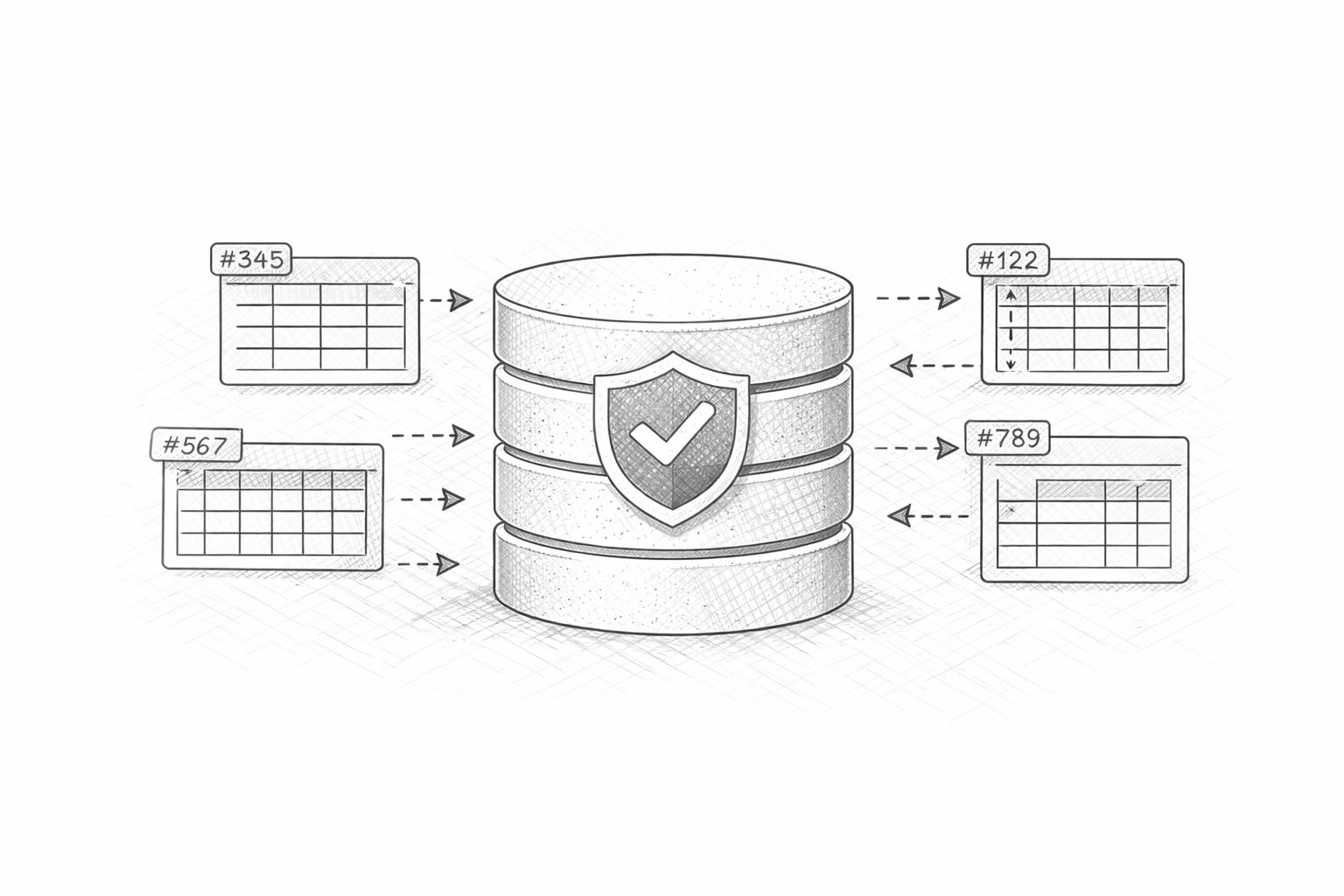
This layer exists to persist structured information.
The primitive clarifies what information must exist in the future precisely as it does today, and what can and cannot be inferred, recomputed, or left transient.
You can keep a record of your data in different formats.
There are various types of databases now offered within the CodeGen platforms, vertically integrated for ease of use.
5. File & Asset Storage
SSF Primitive: Not all data fits in a database with structured storage
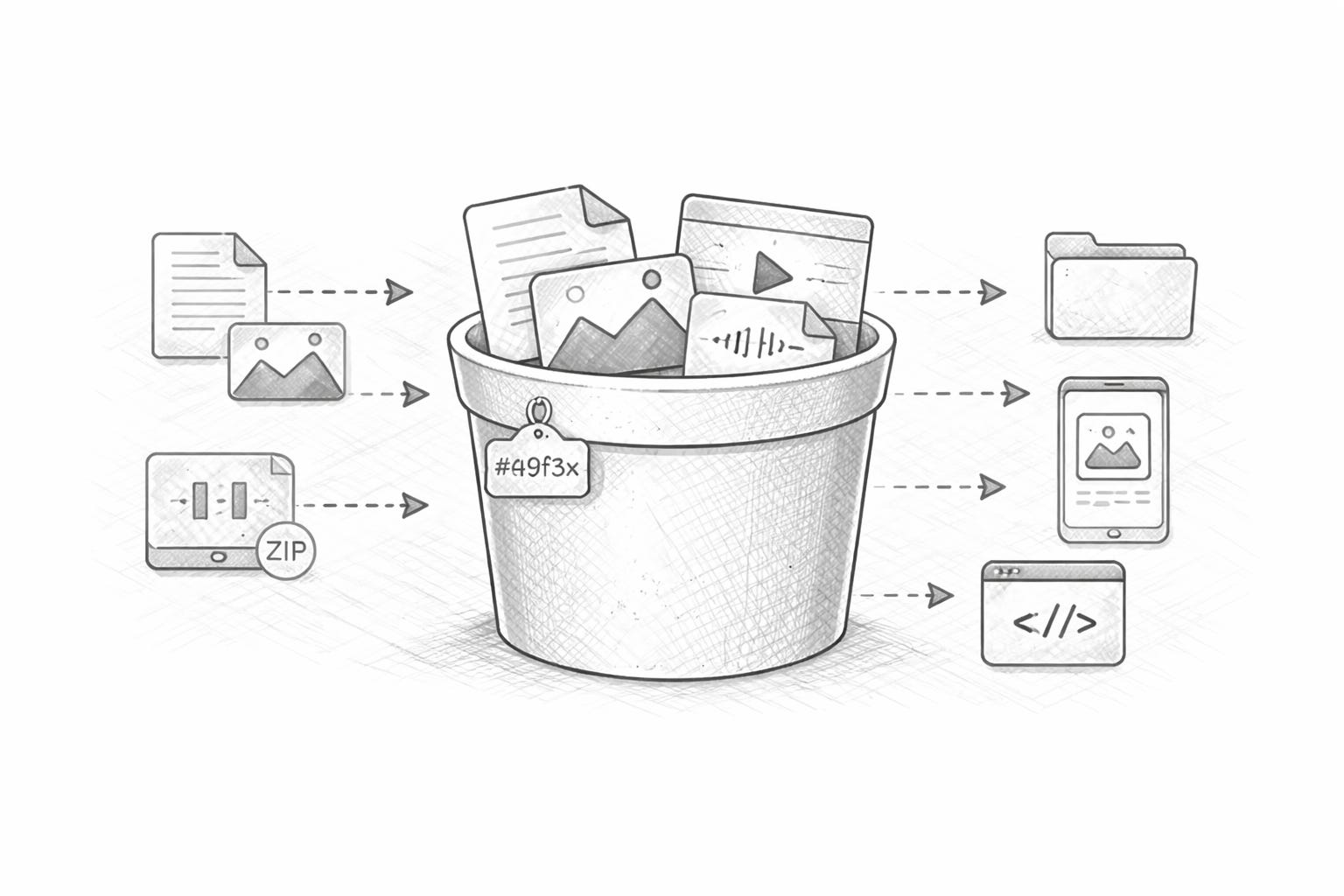
This layer exists to store unstructured data.
The primitive forces the separation between tabular truth and files such as uploads, documents, and input files for LLMs or AI-generated outputs that do not belong in rows and columns.
You can store files in various formats, from text documents to images and multimedia.
6. Payments & Monetization
SSF Primitive: Some actions create obligation. Plus, you can cash in on your build
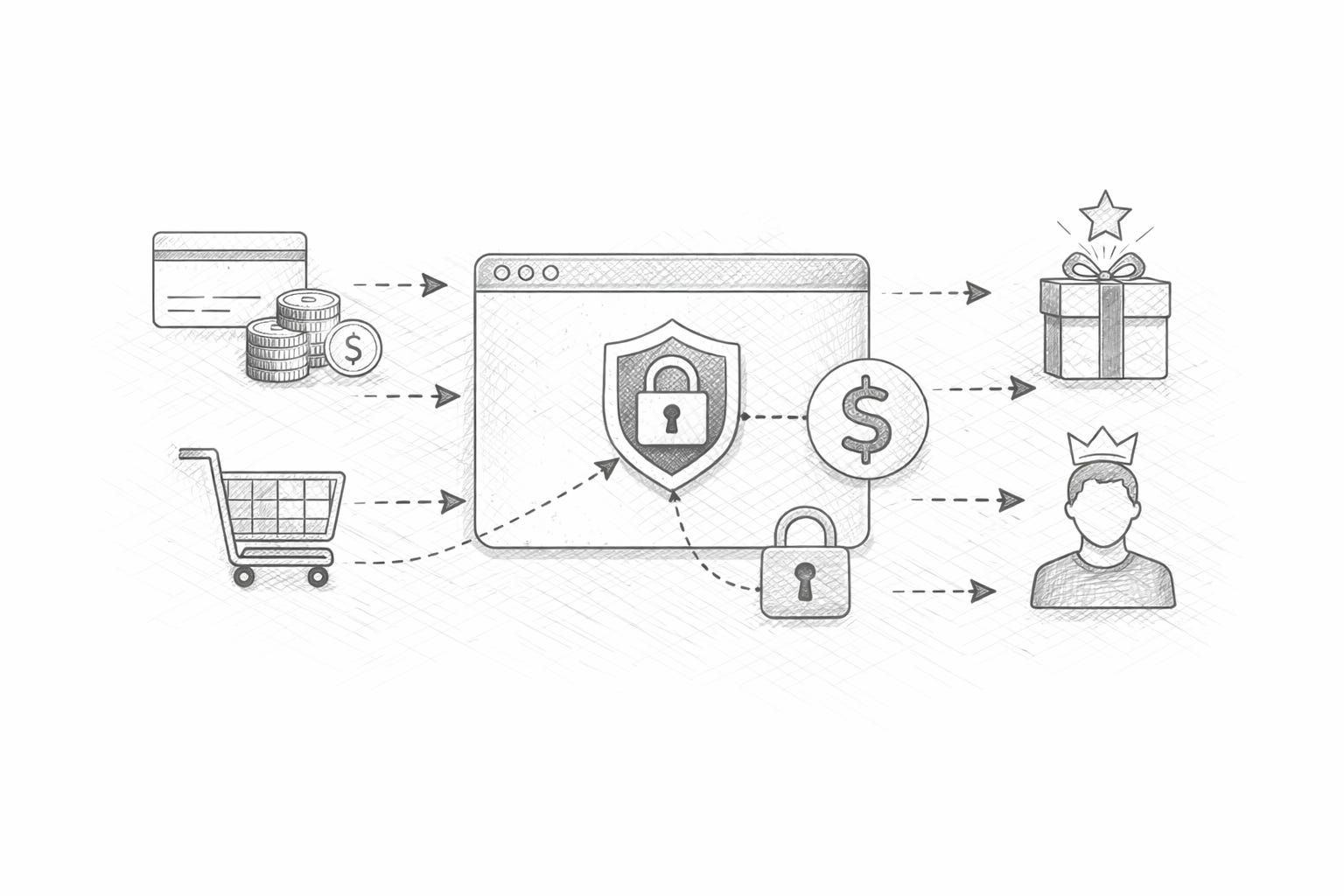
This layer exists when there is an exchange of value between you and the user of your product.
The primitive clarifies that monetization is not just about charging for access, but about mapping payments to access, limits (especially if you are offering Gen AI features powered by LLMs), and entitlements within the product.
Payment processing infrastructures are abstracting away most of the complex parts, but having a clear picture of how your monetisation strategy works is essential.
If you have nothing to sell, then you are good without it. Plus, you can drop the "buy me a coffee" tagline.
7. Analytics & Observability
SSF Primitive: If you can’t see it, you don’t control it
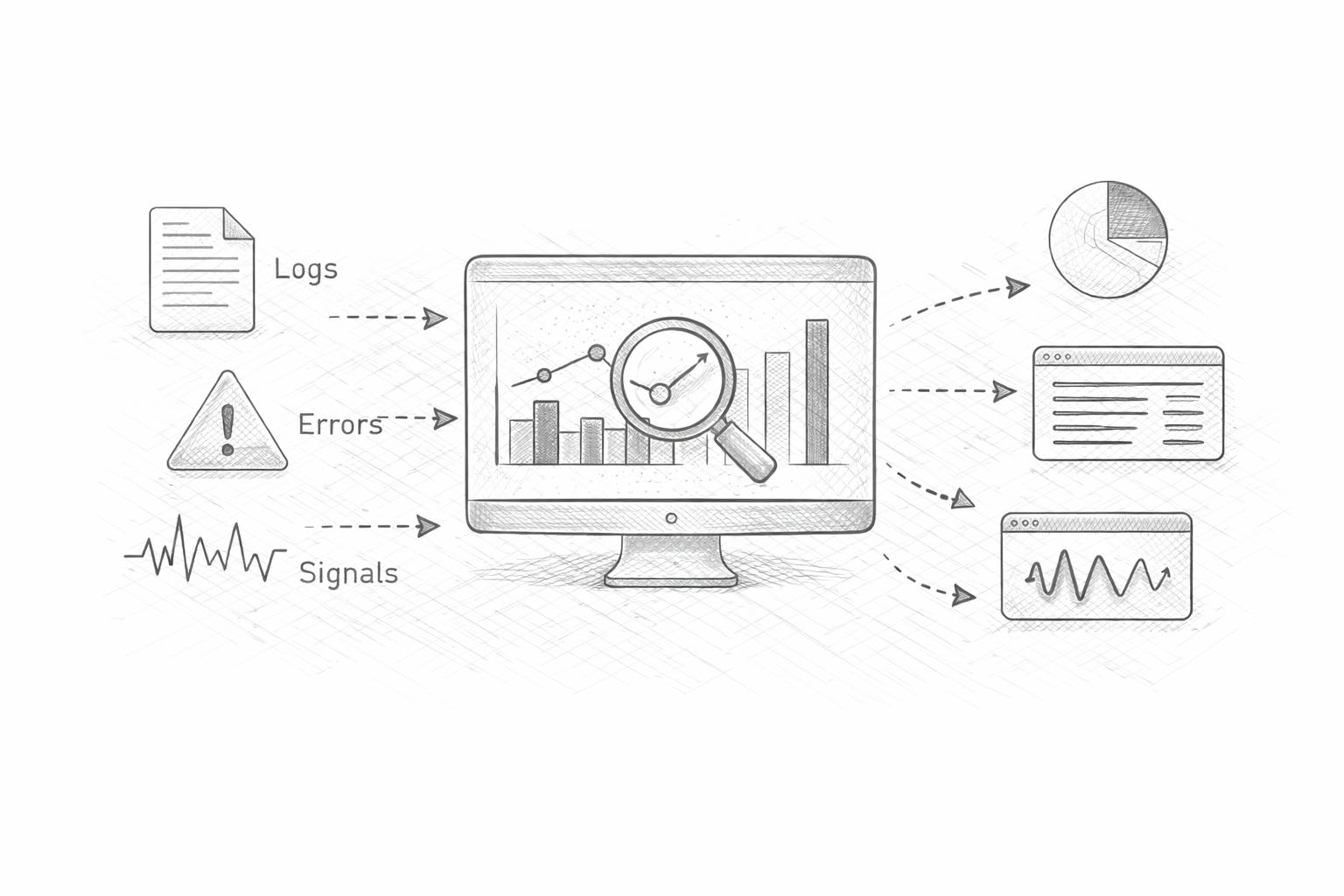
This layer exists to observe the behavior and system health of your product and the infrastructure on which it is published (deployed is the technical term).
The primitive forces the decision about what to track and measure to assess the product's health in operation, especially once real users are involved.
It can be handy even if your build it meant just for you - software for one- that has implementations that are intended to run autonomously in the background, like cron jobs (check primitive 9).
Having the means to observe the things that you have configured to run autonomously can be handy.
The CodeGen platforms, again, are bringing analytics into the fold. You can easily track the performance of your product live from within the dashboards of your chosen CodeGen platform.
But if you choose to deploy beyond what the CodeGen’s are offering, you must know what analytics & observability are for.
8. GenAI & Intelligence
SSF Primitive: AI should support only specific product features (don’t just infuse AI into your build for the sake of integrating AI driven by FOMO)
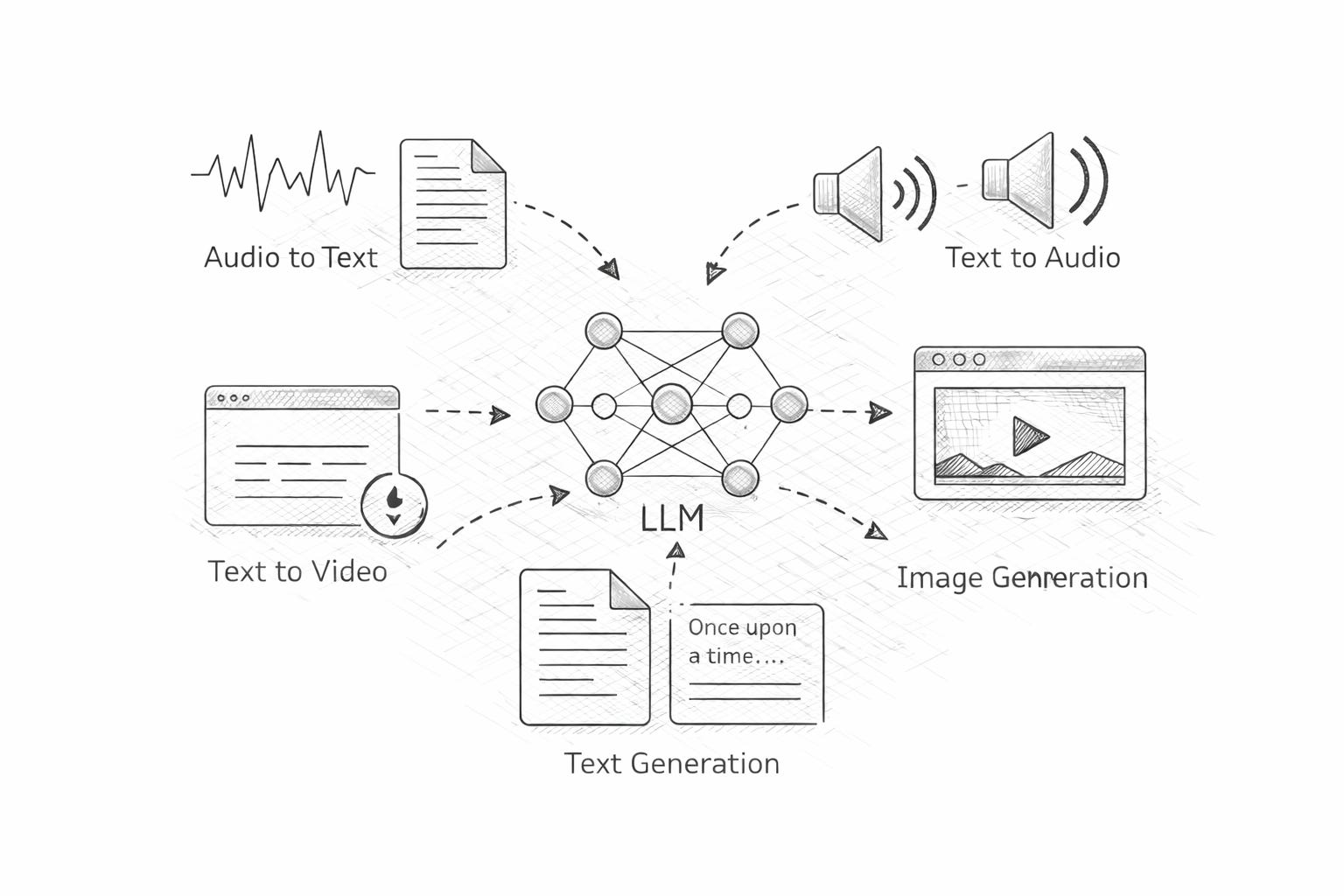
This layer exists to integrate AI capabilities. It’s easy to get overwhelmed by AI features these days.
But unless there is a distinctive value that LLMs can bring to taking your product to the next level in terms of measurable outcomes, such as usability, accessibility, ease of use, or some other feature that your end users could benefit from, there is no need to do so.
The primitive constrains AI usage to explicit, practical use cases rather than novelty-driven ones, ensuring AI outputs serve the product rather than dominate it.
Again, in this regard, the CodeGen platforms have integrated direct inference features within their dashboard, so you can easily infuse AI into your build. Of course, the token price for build is different from the inference cost your product will incur upon usage.
9. Jobs That Run Asynchronously
SSF Primitive: Some work should not necessarily be triggered by the user- your users
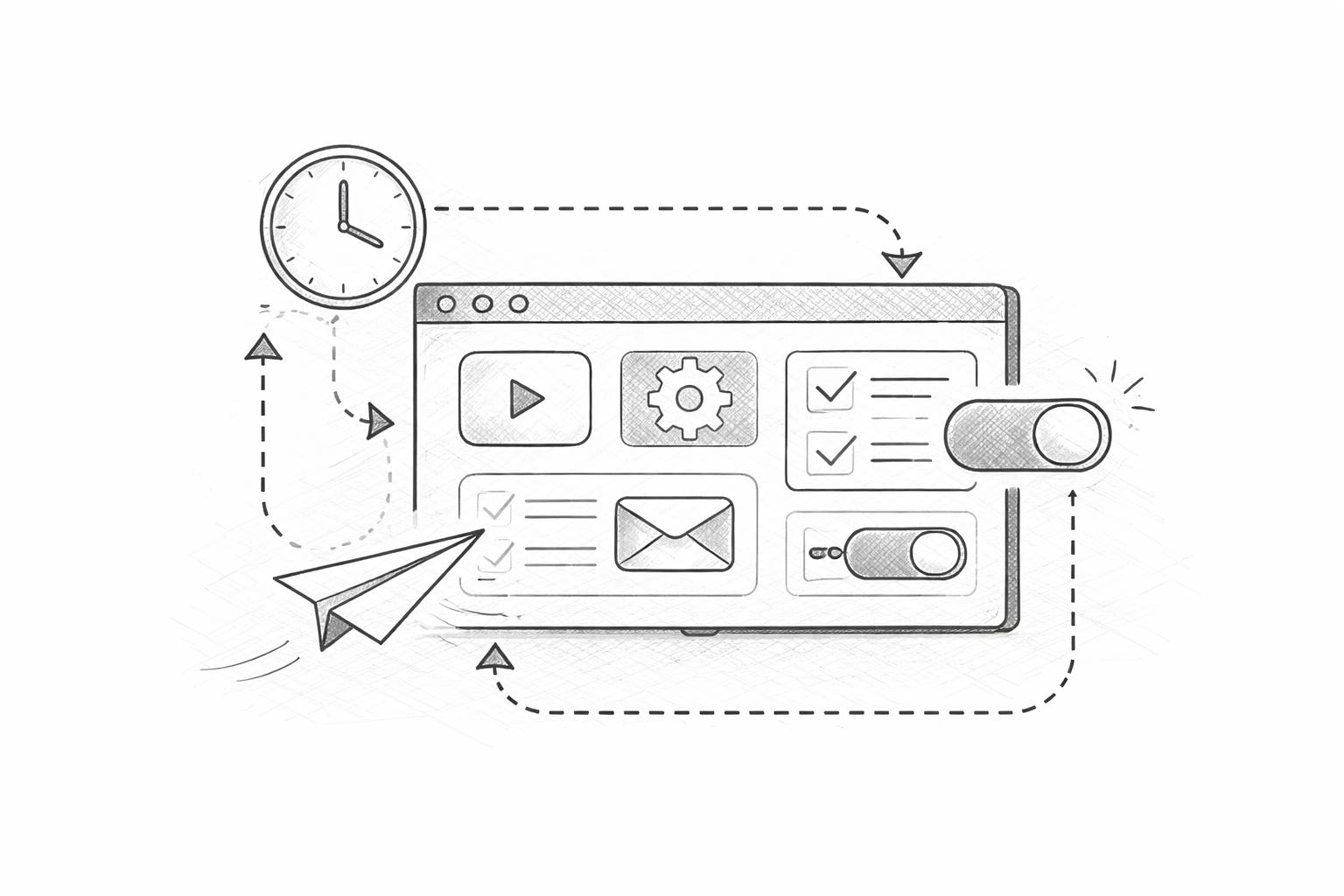
This layer handles running scheduled or asynchronous tasks.
The primitive forces the decision of what work belongs outside the request–response (event-driven) flow that requires direct user (not only your end users, in this case, it could be you; are you going to sit and run every script, say website crawling logic, manually? ) engagement, without drifting into agent hype or automation theater.
Cron jobs have been here forever.
They do the job without you having to click on anything manually.
Do not confuse these with agents. That is a whole new story. A story I do not intend to talk about in the near future.
10. Deployment & Scaling
SSF Primitive: Your Build must keep working after you ship without going offline
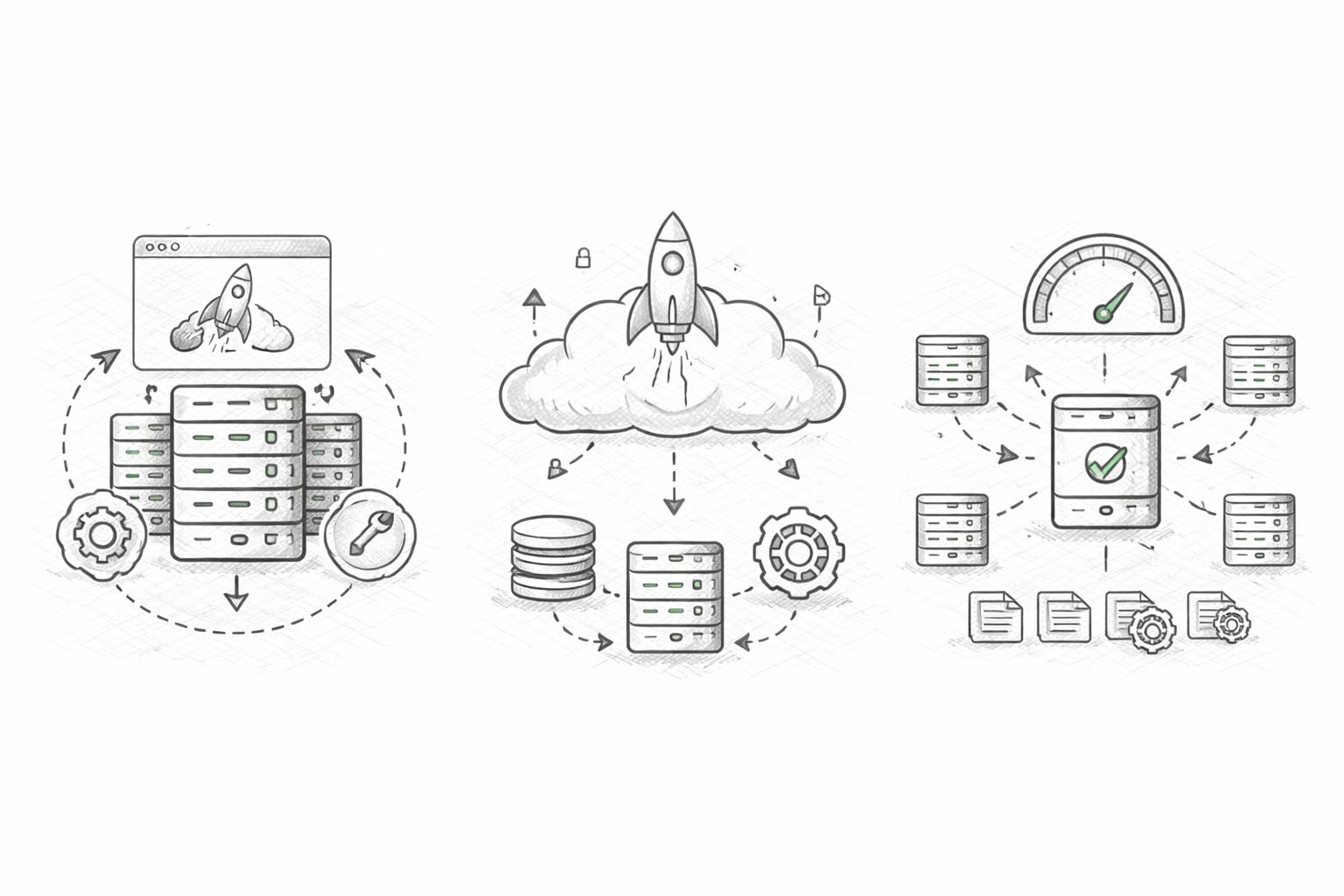
This layer exists to make the product available and resilient.
Your product will be reachable 24/7.
The primitive clarifies expectations around availability, scaling as the number of users increases, reliability, and security.
Like most of the building blocks outlined in this Framework, the CodeGen platforms also make it easier to publish your product seamlessly with your own specific domain name right within the dashboard.
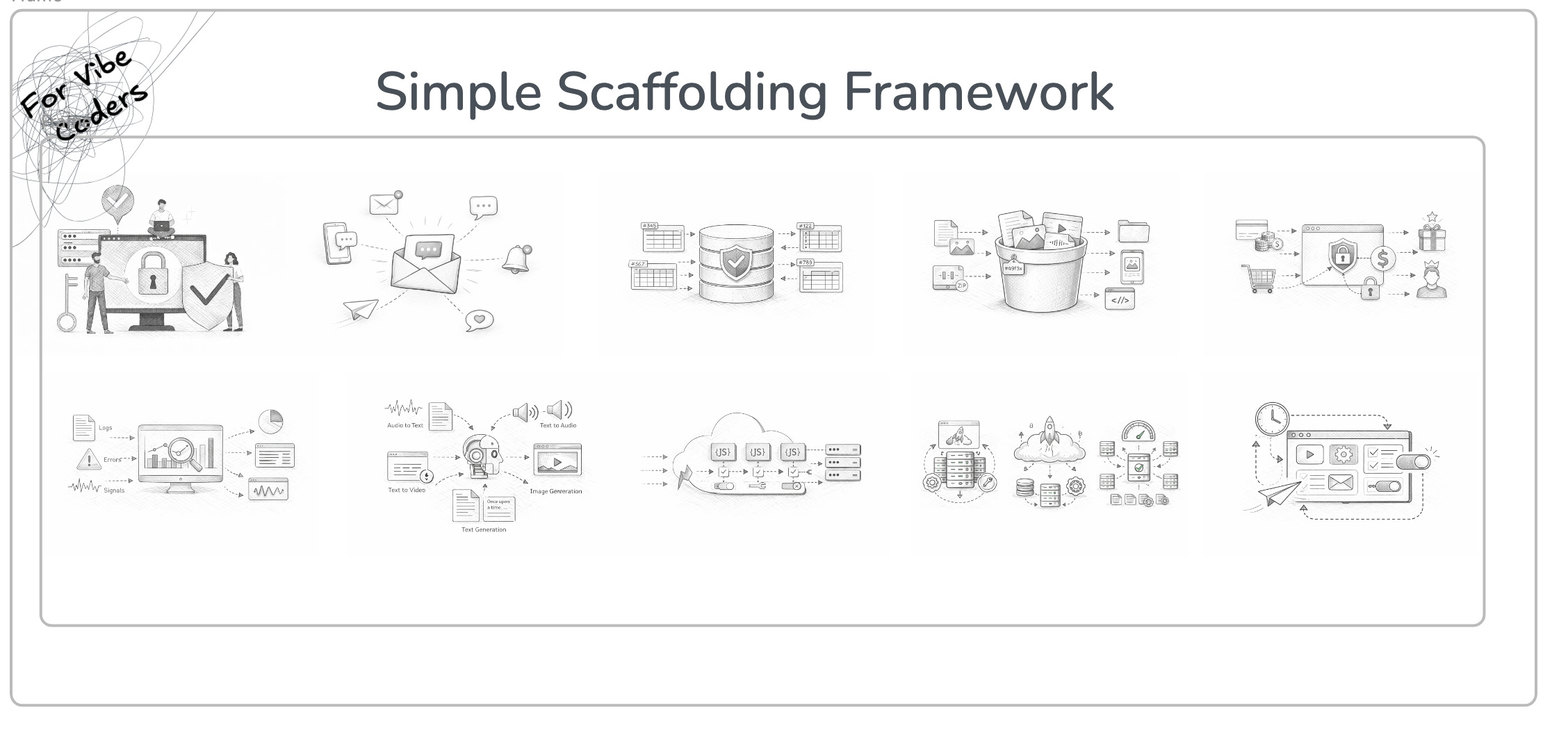
Before we wrap up, I would like to note that the CodeGen platforms are bringing almost all of these components under their umbrella through vertical integration.
That is a good thing, as it saves you from relying on the non-deterministic nature of the LLMs. However, the intended purpose of this Framework is to help you build a shared picture of your build, with the LLMs powering the coding agents under the hood.
How Vertical Integration Could Finally Deliver on the Promise of Vibe Coding — Especially for Non-Techies

The original promise of Vibe Coding was only partly fulfilled, especially from the perspective of non-technical builders.
It doesn’t matter which CodeGen Platforms or AI-assisted coding tool you prefer; the Framework remains a practical, foundational truth that helps you visualise how modern software products are wired. The bare minimum components that can take your Minimum Viable Product (MVP) live until the next milestone in your product's lifetime is reached, whether you do it yourself or bring in a technical partner.
Before You Build Anything- Go Make Your First Build, Not So Fast
With the Simple Scaffolding Framework, you can picture every aspect of the components that make up modern software products, so you can build a shared picture of your product-to-be with the LLMs powering the coding agents embedded in the CodeGen platforms and AI-assisted coding tools you use to build with AI.
You can decide which building block the LLM should consider when handling a specific feature of your build.
You can tell whether adding one component or another can deliver value to your product.
You can also picture the early trade-offs you need to make so you don’t bloat your build with every component to make it look and feel cool (or make yourself look cool).
With these building blocks clearly defined in your “early stage” builder mindset, you can play with them like LEGO pieces when composing your software product to bring your idea to life.
Now you know which part fits where and how it fits.
The Simple Scaffolding Framework makes it effortless to have a shared picture of your build with the LLMs powering the coding agents.
P.S:
The Simple Scaffolding Framework is now part of the Vibe Coding Prompt Kit.
The Vibe Coding Prompt Kit is one of the resources provided to paid subscribers as part of their onboarding package.
All you have to do is duplicate the updated Notion template you are already eligible for.

If you are a free subscriber, there is a free version of the Prompt Kit you can try before committing, in case you ignored your onboarding email.
However, an upgrade can give you everything, including lifetime updates.